




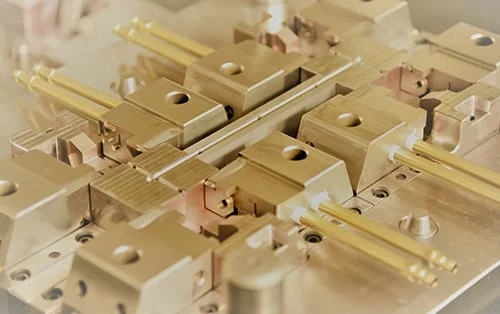
Moldmaking is pivotal in numerous industries, and staying abreast of the latest trends and technologies is crucial for success. As the China Moldmaking industry constantly evolves, professionals need to adapt and embrace emerging innovations.
Here in this post, we’ll explore the dynamic world of moldmaking, its transformative journey, and the industry’s current state. After that, we’ll delve into exciting emerging trends and advanced technologies revolutionizing the field, providing valuable insights to help moldmakers thrive in today’s competitive market.
The Evolution of Moldmaking
The art of moldmaking can be traced back centuries, evolving from simple techniques to highly sophisticated processes. From traditional hand-carved molds to the development of precision machines, this journey showcases the ingenuity of human creativity and engineering.
The Industrial Revolution marked a significant turning point with the advent of mechanization, enabling mass production. Over time, materials, software, and automation advancements have continued to shape China Moldmaking, opening doors to unprecedented possibilities in diverse industries.
Current State of Moldmaking
Today, moldmaking stands at the forefront of modern manufacturing processes. Computer-aided design (CAD) and computer-aided manufacturing (CAM) have become integral, facilitating precise mold designs and streamlined production.
CNC machining has revolutionized mold production to offer enhanced accuracy and efficiency. Additionally, moldmakers have embraced additive manufacturing techniques like 3D printing for rapid prototyping and intricate mold designs. Continuous innovation further eliminates challenges like high costs, lead times, and complex designs.
Emerging Trends in Moldmaking
The moldmaking industry is witnessing transformative trends that promise to redefine how molds are created.
1. Hybrid Molds:
It combines traditional machining with additive manufacturing techniques to achieve versatile and efficient mold production.
It also enables the creation of complex geometries and intricate designs to reduce lead times and enhance product customization.
It utilizes the best attributes of both methods to optimize material usage and reduce waste.
2. Smart Automation:
It incorporates robotics and AI-driven systems to streamline manufacturing processes and enhance productivity.
Smart automation allows for autonomous operations to reduce manual labor and human error.
Real-time data monitoring and predictive maintenance help optimize mold performance and minimize downtime.
3. Advanced Simulation Software:
It utilizes sophisticated software tools for virtual testing and analysis of mold designs before physical production.
Advanced Simulation Software also identifies potential design flaws early in the process to save time and resources.
It also allows for iterative improvements, which leads to higher-quality molds and final products.
4. Sustainable Practices:
Emphasizing eco-friendly materials and energy-efficient processes to address environmental concerns.
Appeals to environmentally conscious clients and aligns with sustainable business practices.
Sustainable practices also foster a positive brand image and support the global push for sustainability.
Cutting-edge Technologies in Moldmaking:
Technological advancements continue to push the boundaries of moldmaking.
1. Artificial Intelligence (AI):
AI-driven mold design optimization analyzes vast data sets to identify potential improvements and efficiencies.
Predictive maintenance powered by AI algorithms reduces machine downtime and optimizes production schedules.
AI-powered quality control identifies defects and ensures high precision in mold production.
2. Internet of Things (IoT) Integration:
Embedding IoT devices into molds for real-time data monitoring during production.
Enables remote monitoring and management to facilitate quick adjustments and response to production issues.
IoT-driven predictive analytics for proactive maintenance and process optimization.
3. Additive Manufacturing Advancements:
Direct Metal Laser Sintering (DMLS) and Stereolithography (SLA) techniques offer greater design freedom and cost-effectiveness.
3D printing of intricate and complex molds reduces the need for multiple parts and assembly.
Lightweight and high-strength materials are used in additive manufacturing for improved performance and reduced material usage.
4. Precision Metrology and 3D Scanning:
High-precision metrology tools for accurate mold inspection and quality control.
Non-contact 3D scanning technologies capture detailed surface information of molds.
It ensures tight tolerances and high-quality finished products.
Advantages of Adopting New Trends
Embracing emerging trends and technologies presents several advantages for moldmakers and their clients.
1. Hybrid molds and additive manufacturing techniques reduce production lead times, enhance product customization and lower material waste.
2. Smart automation streamlines processes, improves productivity and minimizes manual errors.
3. Advanced simulation tools help identify potential design flaws early to save time and resources.
4. Moreover, integrating AI, IoT, and machine learning optimizes mold performance to reduce downtime and enhance overall efficiency.
5. Embracing sustainability practices not only benefits the environment but also appeals to eco-conscious clients, leading to a positive brand image.
Challenges and Considerations
While the prospects are exciting, adopting new trends and technologies in moldmaking comes with challenges.
Integrating automation and AI may require upskilling and workforce training, and initial investment costs can be significant.
Hybrid molds may demand seamless integration of different production processes, necessitating careful planning.
Ensuring data security and addressing potential cybersecurity risks in an interconnected manufacturing environment is also crucial.
Overcoming these challenges requires a strategic approach, collaboration, and a willingness to embrace change.
Future Outlook
The future of China Moldmaking promises even greater advancements, driven by continued innovation and interdisciplinary collaboration.
1. Emerging technologies will likely become more accessible, making them indispensable in moldmaking.
2. Sustainability will play a pivotal role due to an increased focus on recyclable and eco-friendly materials.
3. As AI and automation become more sophisticated, moldmakers can expect streamlined, autonomous production processes.
4. Ultimately, moldmaking will remain a vital pillar of modern manufacturing that will continuously shape our world.
Final Recommendations
In conclusion, the China Moldmaking industry’s evolution continues to be fueled by emerging trends and cutting-edge technologies. Embracing these advancements is essential for moldmakers to stay competitive and deliver exceptional products to their clients.
By continuously exploring new possibilities, moldmaking will stay at the forefront of modern manufacturing and shape the future of various industries.